

Hoshin Kanri Strategy with McKinsey Matrix
In a constantly changing world, innovation is the keystone of any business strategy.
It embodies our ability to push the boundaries of possibility and reinvent our future. By exploring how to integrate innovation into the heart of your strategy, you embrace a radical transformation that transcends the simple creation of products or services.
“Strategic innovation requires creativity, courage, and an unwavering willingness to learn and adapt.”
Open new doors and become the pioneers of your own strategic adventure because innovation is within the reach of every company, regardless of its size.
Imagine a powerful tool that combines three management methods to help your small business grow and prosper.
This is what we will explore: how to use Hoshin Kanri, the McKinsey Matrix, and segmentation to make informed decisions and establish a solid strategy.
The Combination with Hoshin Kanri
Here’s how to do all this in practice:
- Collect data: Start by gathering all the information about your business, your competitors, and your market. The more you know, the better.
- Identify the criteria: Next, determine which factors are important for dividing your business into segments. This could be market size, profitability, or other things specific to your industry.
- Analyze data: Use simple tools to group your segments logically. Think of it like sorting candy by color.
- Create your segmentation : Once sorted, you now have clear and understandable segments. You know what the pieces of the pie are. B2B segmentation parameters examples :
- Industry: Healthcare, Technology, Manufacturing
- Company Size: Small, Medium, Enterprise
- Location: North America, Europe, Asia
- Revenue Range: Under $1 million, €1-10 million, Over £10 million
- Decision-Maker Role: CEO, CFO, IT Manager
- Customer Lifecycle Stage: Prospect, Lead, Repeat Buyer
- Usage Frequency: Daily, Weekly, Monthly
- Budget Allocation: Marketing, IT, Operations
- Digital Maturity Level: Beginner, Intermediate, Advanced
- Market Position: Market Leader, Niche Player, Challenger
- Assign indicators: For each segment, choose performance indicators. This allows you to measure their success.
- Integrate them into the McKinsey matrix: Place your segments on the McKinsey Matrix based on their potential. This shows you what shines brightest.
- Evaluate your strategy: Look at the McKinsey Matrix to know where to focus your energies. Identify the segments that are the most promising.
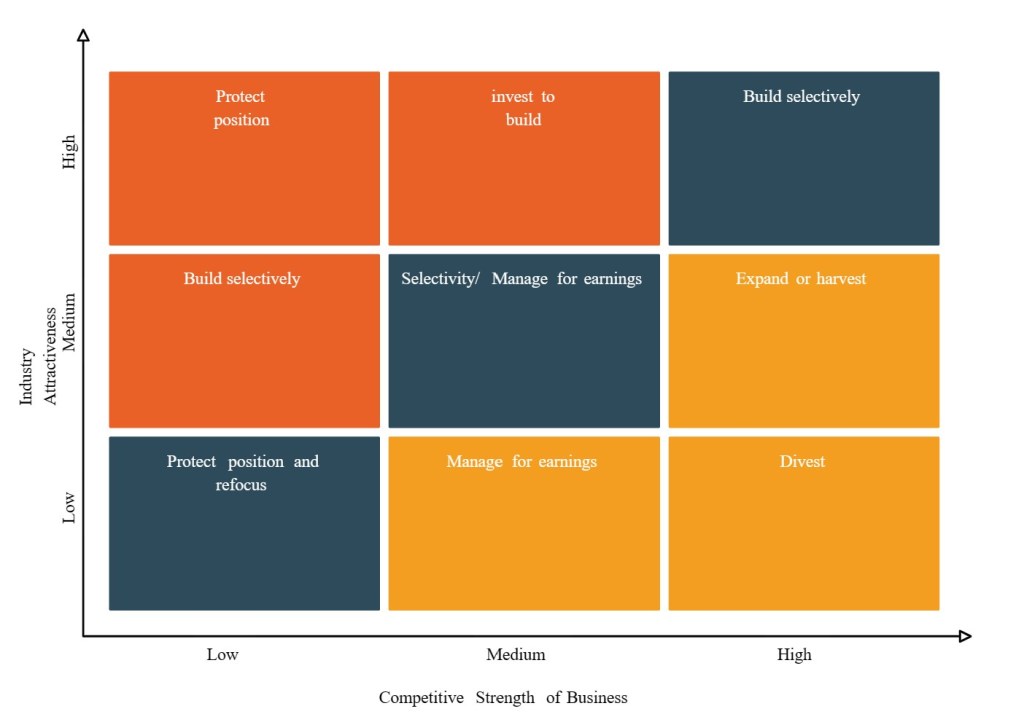
- Define your Hoshin goals: For these promising segments, establish clear goals. It’s like setting milestones on your path to success.
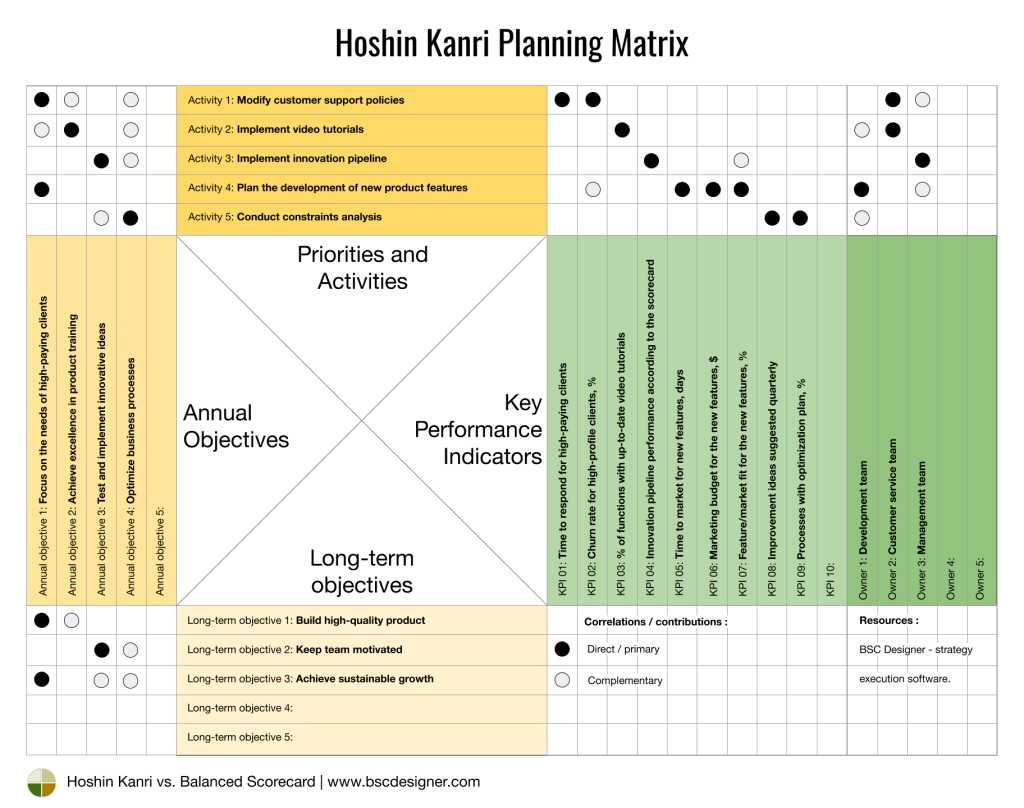
- Plan your actions: Create plans to achieve these goals. What actions should you take? Who should do what? Make a solid plan.
- Track and adjust: Keep an eye on your progress and adjust your plans as necessary. It’s like navigating a river – there can be unexpected turns.
- Re-evaluate the McKinsey matrix: Periodically, return to the McKinsey Matrix to ensure you are on the right track.
By combining these methods, you can align your strategy with what works best for your business. This gives you an advantage, a treasure map to guide your growth. So, get out there, explore these tools, and get ready to navigate new horizons of success. You have the power to do big things, even as a small business.
The combination can be applied in various industries and contexts
- Renewable energy sector expansion : An energy company applies these methods to segment regions based on renewable energy potential and government incentives. It guides investment decisions in sustainable energy projects.
- Consulting services client strategy : A consulting firm uses these methods to segment clients based on their industry, challenges, and growth goals. This informs tailored consulting services and recommendations.
- Manufacturing supply chain optimization: A manufacturing company applies Hoshin Kanri and the McKinsey Matrix to segment suppliers based on reliability and cost-effectiveness. This helps streamline the supply chain and reduce costs.
- Startups product development: A tech startup uses these methods to prioritize features for its software product. They segment potential users by their specific needs and preferences, ensuring a product-market fit.
A sustainable future through strategic alignment
Now is the time for businesses to lead change towards a sustainable future.
Climate change is a challenge that affects us all, and it is time to recognize that innovation and strategic alignment are the keys to our survival.
As we’ve seen, innovation can turn problems into opportunities, and by aligning your strategy with climate change, you can become a true agent of change.
“Don’t underestimate the power of your business to catalyze bold, creative solutions.”
Together, we can design strategies that preserve our planet while driving economic growth.
It’s not just about preserving our environment for future generations, but also about thriving in a changing world.
It’s a difficult journey, but by working together, we can create a sustainable and equitable future for all. Join us in this quest.”
In summary, Strategic innovation and sustainable growth
- Innovation is the catalyst for pushing the boundaries of possibility and reinventing the future.
- Integrating innovation into your strategy leads to radical transformation beyond product or service creation.
- Strategic innovation necessitates creativity, courage, and a willingness to learn and adapt.
- Every company, regardless of size, can harness the power of innovation to pioneer their strategic adventure.
- The combination of Hoshin Kanri, McKinsey Matrix, and segmentation is a powerful tool for small business growth.
- Practical steps for this approach include data collection, criteria identification, data analysis, creating segments, assigning indicators, integrating segments into the McKinsey Matrix, strategy evaluation, goal definition, action planning, tracking, and periodic McKinsey Matrix reassessment.
- These methods allow businesses to align their strategies effectively for growth and success.
- Leading change towards a sustainable future is vital in the face of climate change.
- Innovation and strategic alignment are essential for survival and can transform challenges into opportunities.
- Businesses have the power to catalyze creative solutions and design strategies that preserve the planet and drive economic growth.
- Thriving in a changing world and creating a sustainable, equitable future requires collective effort and collaboration.
“The strategy is like a ball tossed between different levels in the organization until a final decision is made. A catchball is, first of all, an exchange of opinions, discussion, each participant in the process should hear the other.”
Alexey Cherkasov
References :
 Happy CEO