
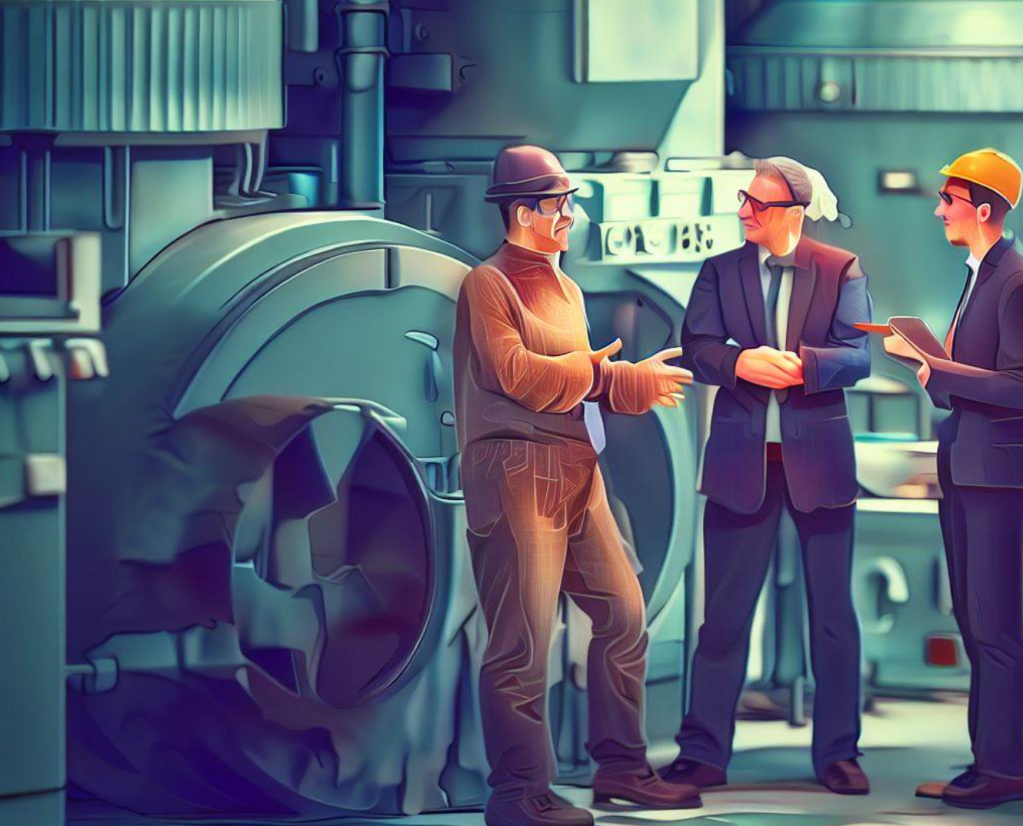
The considerable success known by Lean and its expansion around the world is due to the fact that it encompasses all processes as a strategic issue for the company.
A single value-creating system instead of trying to silo the creation of value within the services and put them in competition against each other through a purely financial prism of profitability.
Lean management views the company as a single value-creating system.
- What are improvement ideas and their implementation worth?
- How can we measure and improve value creation?
The key to lean governance is to think “customer”.
The strategy should aim to offer customers the perfect product or service they desire.
In the Lean philosophy, we don’t push products, we co-create them with and for customers.
By putting the customer at the center of the company’s decisions, by empowering employees to rethink the system at all levels, by redefining the value chain and value creation through work, and by identifying risks, lean management becomes a tool for sustainable development for companies.
But how is value creation measured?
“The Value creation can be measured by the difference between the resources consumed and the price paid by the customer. Profit is the residual between the total revenue collected and the total resources consumed. The net result does not necessarily correspond to the notion of profit as a measure of value creation because it does not allow us to understand the various processes that contribute to this value creation.”
Benoît Pigé, 1
Governing through Lean means seeking to identify tense or risky situations in each process and exploiting one’s own resources to create more value.
In this philosophy, there are no long-term fears, weaknesses or threats since “Kaizen” is already anticipating and improving the system as a whole, including governance, vision and strategy.
Many times, Lean has proven, thanks to its ability to adapt quickly to the demands of crises, that companies that have implemented it are more resilient.
Money and time saving by getting rid of the 8 mudas
The constant hunt for Mudas (waste) gives companies a competitive edge. Large organizations, private or public, tend to create a significant accumulation of countless layers, processes, administrative and organizational barriers that make them fragile in times of crisis.
In lean philosophy, these wastes are detected and eliminated by small iterations, daily, to make the system efficient and resilient in case of disruptions.
With the concept of “Just in time”, a lean company does not store anything. Each product manufactured or service delivered is strictly linked to a customer order. This changes the way of thinking about the whole supply chain and the company’s strategy itself.
“By reducing stocks or buffers to a minimum, lean makes all actors in the value chain interdependent on each other, forcing them to improve.”
In fact, the entire supply chain, sourcing and investments necessary for the production tool, human resources management, etc. are redesigned. Including among stakeholders. The entire value chain is redesigned.
Lean requires a great versatility of teams and equipment.
As we have said, the implementation of lean relies primarily on employees. They are the ones who detect and eliminate waste and improve processes. To be effective, each employee must embrace the philosophy of “Kaizen”, continuous improvement, always learning and sharing knowledge with others.
There is only one way to achieve this transformation: that the governance itself engages in the lean philosophy to learn, observe in the field and transmit.
“Leading by example creates trust and shapes the culture.”
In summary, Lean governance :
- treats all processes as strategic issues for the company and views the company as a single value-creating system
- focuses on offering customers the perfect product or service they desire and co-creating with them
- is a tool for sustainable development that measures value creation by the difference between resources consumed and price paid by the customer
- anticipates and improves the system as a whole, including governance, vision and strategy, through continuous improvement or “Kaizen”
- eliminates waste and makes the system efficient and resilient in times of crisis
- links each product or service to a customer order and reduces stocks or buffers to a minimum, making all actors in the value chain interdependent and improving the whole supply chain
- relies on employees who embrace “Kaizen” and learn and share knowledge with others
- engages in the lean philosophy to learn, observe in the field and transmit, leading by example and shaping the culture
“There is no patience for waste.
Jack Welch
References :
1- Lean management : une réinterprétation par la gouvernance. Benoît Pigé. Finance & Contrôle au quotidien. Dunod, 2013
 Happy CEO